
Bioma GLP-1 Booster Reviews: Can Supporting Your Gut Help Quiet Food Noise?
Constant cravings can make healthy eating feel harder than it should. You may start the day with a clear plan, only to find yourself thinking about snacks, second portions, or your next meal a few hours later.


That is where Bioma GLP-1 Booster takes a different approach.
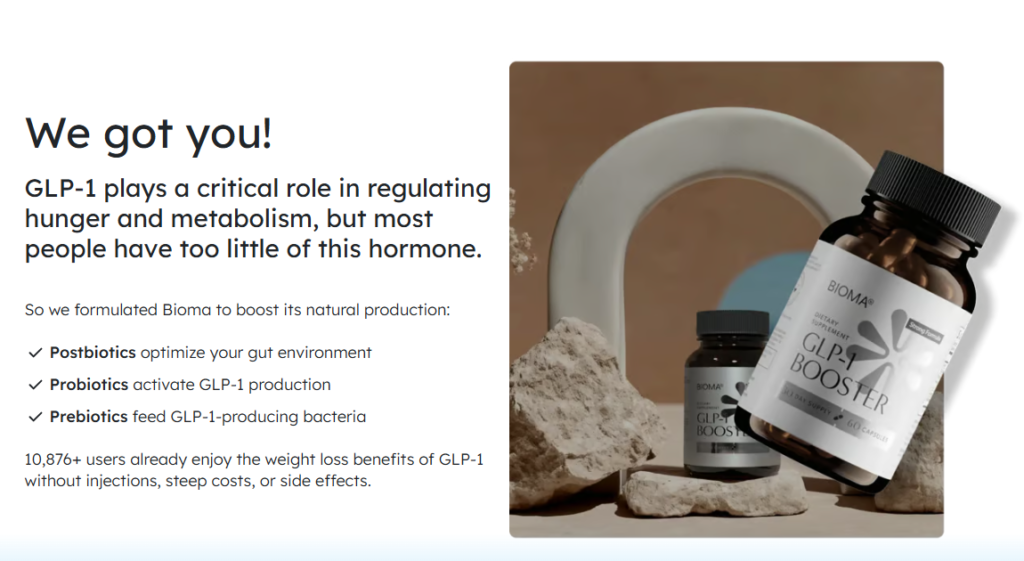
Instead of presenting itself as a conventional stimulant-based fat burner, Bioma focuses on the gut microbiome and the beneficial bacteria associated with natural GLP-1 activity. The official GLP-1 page specifically frames the product around supporting bacteria that can become depleted through factors such as age, stress, and dieting.
However, there is an important distinction: Bioma is a dietary supplement, not a GLP-1 prescription medication. Its website also states that its claims have not been evaluated by the FDA and that the product should not replace medical advice or treatment.
So, what exactly is Bioma trying to do, and does its formula make sense for someone searching for natural appetite and weight-management support?
Bioma GLP-1 Booster at a Glance
| Feature | Details |
|---|---|
| Product | Bioma GLP-1 Booster |
| Category | Gut-health and weight-management supplement |
| Main approach | Gut microbiome and GLP-1 support |
| Key probiotic strains | Bifidobacterium breve, B. longum & B. lactis |
| Prebiotic component | Xylooligosaccharides (XOS) |
| Postbiotic component | Tributyrin |
| Stimulant-based fat burner | No |
| Primary focus | Gut health, digestion and appetite support |
| Form | Delayed-release capsules |
| Intended audience | Adults seeking nutritional gut and weight-management support |
The formula information above comes from Bioma’s current product materials; always check the physical label for the exact formulation associated with the product you purchase.
What Is Bioma GLP-1 Booster?
Bioma GLP-1 Booster is designed around a relatively simple idea: your gut microbiome matters.
Rather than relying on a large stimulant blend, the product combines probiotics, a prebiotic ingredient and a postbiotic ingredient. Bioma’s broader product information identifies three Bifidobacterium strains, XOS and tributyrin as key components.
That makes the product fundamentally different from products marketed as traditional “fat burners.”
The goal isn’t to create a sudden burst of stimulation. Instead, Bioma’s positioning centers on supporting the gut environment and the body’s natural appetite-regulation processes.
Why Does Bioma Talk About GLP-1?
GLP-1, or glucagon-like peptide-1, plays several important roles in normal physiology, including appetite and glucose regulation.
Bioma’s GLP-1 landing page focuses specifically on gut bacteria associated with GLP-1 production. The marketing message suggests that supporting these bacteria may help with the persistent desire to snack or constantly think about food.
But don’t confuse this concept with prescription GLP-1 medicines.
Bioma does not contain a prescription GLP-1 drug such as semaglutide or tirzepatide. It is positioned as a nutritional supplement intended to support the gut and related natural processes.
That distinction matters when evaluating the product.
What’s Inside the Bioma Formula?
Bifidobacterium breve
Bifidobacterium breve belongs to the Bifidobacterium family of beneficial bacteria. Bioma includes it as part of its probiotic blend and associates its formula with digestive and microbiome support.
The purpose here isn’t to provide a quick stimulant effect. Instead, the strain forms part of a broader strategy for maintaining a healthier gut environment.
Bifidobacterium longum
Bifidobacterium longum is another probiotic strain included in Bioma.
Bioma’s formulation uses multiple Bifidobacterium strains rather than relying on a single bacterial species. That multi-strain approach gives the formula a broader gut-health focus.
Bifidobacterium lactis
The third listed Bifidobacterium strain is Bifidobacterium lactis.
Together, the three strains create the probiotic foundation of the formula.
Xylooligosaccharides (XOS)
XOS is a prebiotic ingredient. Unlike probiotics, which provide live microorganisms, prebiotics provide substrates that can support beneficial bacteria.
Bioma specifically describes XOS as helping promote beneficial gut bacteria and supporting regularity.
This gives the formula an important distinction: it combines probiotics with a prebiotic rather than treating them as completely separate concepts.
Tributyrin
Tributyrin rounds out the formula’s probiotic-prebiotic-postbiotic approach.
Bioma describes tributyrin in relation to gut-barrier support and metabolic health.
That makes it another piece of the product’s broader gut-health strategy rather than a traditional stimulant ingredient.
The Bigger Idea: Probiotic + Prebiotic + Postbiotic
This is arguably the most interesting part of the formula.
Bioma isn’t simply saying, “take probiotics.”
Instead, its formulation brings together:
- Probiotics — Bifidobacterium strains
- Prebiotic support — XOS
- Postbiotic support — tributyrin
That combination gives the product a more focused microbiome strategy.
Of course, a sophisticated ingredient structure doesn’t automatically guarantee weight loss. Your overall diet, calorie intake, physical activity, sleep and individual physiology still matter.
Bioma itself acknowledges that exercise and a healthy diet remain necessary for achieving and maintaining weight loss.
Could Bioma Help With Cravings?
This is one of the biggest reasons someone may search for a product like Bioma.
The official GLP-1 page focuses heavily on “food noise” — persistent thoughts about eating, snacking and food choices.
Bioma’s broader site also lists appetite control and fewer cravings among the potential experiences users may notice.
Still, expectations matter.
A supplement shouldn’t be treated as a guaranteed appetite suppressant. Individual responses can differ significantly because gut microbiomes differ from person to person.
Therefore, the most sensible way to view Bioma is as nutritional support that may complement healthy appetite-management habits, rather than as a guaranteed solution for overeating.
Bioma vs. Traditional Fat Burners
The difference becomes clearer when you put the two approaches side by side.
| Bioma approach | Traditional fat-burner approach |
|---|---|
| Focuses on gut health | Often focuses on thermogenesis |
| Uses probiotics | Frequently uses stimulants |
| Includes prebiotic support | May emphasize caffeine or botanical stimulants |
| Includes a postbiotic component | Formulas vary considerably |
| Designed around microbiome support | Often marketed around energy and calorie expenditure |
| Not positioned as a stimulant fat burner | Some products rely heavily on stimulants |
Bioma explicitly states that it is neither a fat burner nor a conventional weight-loss pill and describes itself as a probiotic formulation.
That distinction can help shoppers decide whether its approach matches what they are actually looking for.
How Long Does Bioma Take to Work?
Don’t approach Bioma expecting an overnight transformation.
Bioma says the gut microbiome varies between individuals and states that it can take 6–8 weeks for beneficial bacteria to fully colonize the gut. Its current guidance recommends using the probiotic consistently for at least three months alongside a healthy diet.
That doesn’t mean every person will experience the same timeline.
Some users may notice digestive changes sooner, while others may notice little difference. Weight-management results also depend on factors outside the supplement itself.
Consistency therefore matters more than expecting a dramatic first-week result.
What Can You Realistically Expect?
Bioma’s website mentions potential experiences such as:
- Better appetite control
- Fewer cravings
- Smoother digestion
- More stable energy
- Less bloating and gas
These are product-positioning claims rather than guarantees.
A realistic approach is to monitor how your digestion, appetite patterns and overall routine change over time instead of judging the product solely by the scale.
Is Bioma a GLP-1 Medication?
No.
This is one of the most important points to understand before buying.
Bioma is marketed as a dietary supplement that supports gut health and natural processes associated with GLP-1. It isn’t presented as a prescription GLP-1 receptor agonist.
Consequently, you should not expect Bioma to produce the same pharmacological effects as prescription GLP-1 medications.
If a healthcare professional has prescribed medication for diabetes, obesity or another condition, don’t stop or replace that treatment with Bioma without professional guidance.
Is Bioma Safe?
Bioma’s current FAQ recommends consulting a physician if you have a medical condition. It also advises adults to keep the supplement away from children and to stop use and seek medical advice if unusual or allergic-type symptoms occur.
The manufacturer also recommends speaking with a healthcare professional before combining Bioma with medication.
Extra caution makes sense if you are:
- Pregnant or breastfeeding
- Taking prescription medication
- Managing a chronic medical condition
- Sensitive to supplement ingredients
- Experiencing unexplained digestive symptoms
Always check the current product label before use.
What About Bioma Reviews?
Bioma’s website displays customer testimonials describing experiences such as reduced bloating, improved digestion, greater energy and weight loss.
However, testimonials don’t establish that the product will produce the same outcome for everyone.
There is also an important transparency point on the official site: Bioma describes a one-week experience involving 14 users and explicitly says that the experience was not a scientific study and that participants were compensated for sharing their experiences.
That’s useful context for evaluating the marketing claims.
In other words, customer stories can tell you what individual users reported, but they shouldn’t replace independent clinical evidence.
Who Might Consider Bioma?
Bioma may appeal to adults who:
- Want a non-stimulant approach to weight-management support
- Are interested in gut microbiome health
- Experience occasional bloating or digestive discomfort
- Want to support a healthier daily routine
- Prefer probiotic-based products over stimulant-heavy formulas
- Understand that supplements work alongside diet and lifestyle rather than replacing them
Who Should Think Twice Before Using It?
You should speak with a healthcare professional before using Bioma if you:
- Take prescription medications
- Have a diagnosed medical condition
- Are pregnant or breastfeeding
- Have known ingredient allergies
- Experience persistent or unexplained gastrointestinal symptoms
This isn’t about making the product sound alarming. It’s about matching supplementation to your individual circumstances.
How to Use Bioma
The broader Bioma FAQ currently lists a serving size of two capsules, with one serving taken once daily before breakfast with a full glass of water.
Because product formulations and instructions can change, follow the directions printed on the package you receive.
For the best overall approach, combine supplementation with:
- A protein- and fiber-conscious diet
- Regular movement
- Adequate hydration
- Consistent sleep
- Reasonable portion sizes
- A sustainable calorie intake when weight loss is the goal
What Makes Bioma Different?
The strongest point of differentiation is its microbiome-first approach.
Instead of simply adding caffeine or other stimulants, Bioma combines multiple probiotic strains with XOS and tributyrin. The company also uses delayed-release capsule technology, which it says helps protect probiotic cultures from stomach acid before they reach the gut.
That gives the product a clear identity.
It’s not trying to be everything at once. Its central story is gut health → microbiome support → appetite and weight-management support.
Important Buying Checklist
Before purchasing Bioma, check these points carefully:
1. Read the current label.
Confirm the ingredients and serving instructions on the package.
2. Understand what you’re buying.
Bioma is a dietary supplement, not a prescription GLP-1 medicine.
3. Don’t rely on testimonials alone.
Individual experiences can vary considerably.
4. Consider your medications.
Ask a healthcare professional about potential interactions.
5. Give the approach reasonable time.
The manufacturer discusses several weeks of microbiome adjustment rather than an instant effect.
6. Keep lifestyle factors in the picture.
No supplement can replace sustainable nutrition and regular physical activity.
Final Verdict: Is Bioma GLP-1 Booster Worth Considering?
Bioma stands out because it takes a different route to weight-management support.
Rather than positioning itself as a conventional stimulant fat burner, it focuses on the gut microbiome and combines probiotics, XOS and tributyrin. The official GLP-1 page specifically connects its approach with bacteria associated with natural GLP-1 production and appetite-related “food noise.”
That makes Bioma particularly interesting for people who want a gut-health-centered, non-stimulant supplement strategy.
At the same time, the product deserves realistic expectations. It isn’t a prescription GLP-1 medication, customer testimonials aren’t clinical proof, and the manufacturer itself states that healthy eating and exercise remain necessary for maintaining weight loss.
Ultimately, Bioma makes the most sense when you view it as one part of a broader wellness routine, not as a shortcut to guaranteed weight loss.