
Fungabeam Reviews: How It Works, Benefits, Safety and What to Know Before Buying
Discoloured, thick or brittle nails can be frustrating to deal with. They may affect your confidence when wearing open shoes, and finding a treatment that fits comfortably into your daily routine can take time. That is why at-home nail-care devices such as Fungabeam attract attention.


Fungabeam is marketed as a light-based device for people concerned about nail fungus. Its sales pages promote a simple home-use routine, with a treatment session advertised to last around seven minutes. However, those promotional claims do not establish that the device can eliminate a fungal infection or restore every affected nail to normal.
This review explores Fungabeam’s intended use, advertised features, potential advantages, limitations, safety considerations and purchasing terms. The aim is to help readers make an informed decision rather than rely on dramatic marketing promises.
What Is Fungabeam?
Fungabeam is a compact, at-home nail-care device marketed for fingernails and toenails affected by changes associated with fungal infections. The product website describes a light-based treatment approach that users can incorporate into their routine without applying a cream during each session.
The device may appeal to people who want a convenient option at home. Nevertheless, convenience alone does not prove medical effectiveness.
Nail discolouration, thickening and brittleness can have several causes, including trauma and certain skin conditions. Therefore, it is important to establish whether a fungal infection is actually responsible before spending money on a specialised device.
How Does Fungabeam Work?
The seller promotes Fungabeam as a light-based device designed to treat nails affected by fungus. Its instructions describe cleaning and drying the affected nail, positioning the finger or toe in the treatment area, and starting the device for the advertised session.
The process is intended to be straightforward:
-
Prepare the nail: Clean and dry the affected area, following the product manual.
-
Position the finger or toe: Place the nail in the device’s designated treatment area.
-
Start the session: Operate the device according to its instructions and allow the session to finish.
-
Maintain nail hygiene: Keep nails clean and dry while following any treatment advice provided by a healthcare professional.
However, a simple treatment process does not establish that the device penetrates the nail sufficiently or kills the fungus responsible for an infection. Those claims require reliable evidence for the exact device.
Fungabeam Features and Potential Benefits
Fungabeam’s appeal centres on its device-based format and the possibility of treating affected nails at home. Here are the main points buyers should consider.
1. Convenient Home Use
The product page advertises a short, approximately seven-minute session. This may appeal to people who prefer a defined routine instead of applying topical products repeatedly throughout the day.
However, check whether the advertised duration applies to each nail and how frequently the manufacturer recommends treatment. A short session does not necessarily mean a short overall recovery period.
2. No Antifungal Cream During Each Session
Unlike a topical product, Fungabeam uses a device rather than requiring users to spread cream over the nail during treatment.
That difference may make the routine more appealing to some buyers. Still, it does not mean the device can replace established antifungal treatment or professional care.
3. Designed for Fingernails and Toenails
The seller advertises the device for use on both fingernails and toenails.
Before buying, confirm that the supplied model suits your intended use and review its operating instructions. Different nail conditions may require different approaches, and not every discoloured nail has a fungal infection.
4. A Simple Treatment Routine
The advertised process involves preparing the nail, positioning it in the device and starting a session. That straightforward approach may suit people who value simplicity.
Nevertheless, consistency cannot compensate for a treatment that lacks sufficient evidence. Buyers should evaluate clinical support, device specifications and realistic expectations alongside convenience.
Does Fungabeam Really Treat Nail Fungus?
This is the most important question to consider before purchasing.
Fungabeam’s marketing describes light-based technology intended to address nail fungus. However, the sales information reviewed here does not independently establish that the exact device reliably cures fungal nail infections or produces lasting clinical improvement.
The US Food and Drug Administration’s clearance terminology also requires care: a claim that a device is FDA-cleared should be checked against the exact model and its regulatory documentation. It does not automatically mean the device guarantees a cure. I could not verify the precise regulatory status of the model linked in your checkout URL from the available information.
For consumers in Germany and elsewhere in the EU, look for applicable medical-device documentation and a clear explanation of the device’s intended purpose. Do not assume that a claim on a sales page proves regulatory approval or clinical effectiveness.
If you suspect nail fungus, a pharmacist or doctor can help you choose an appropriate treatment. A clinician may also recommend testing when the diagnosis is uncertain.
Fungabeam vs Traditional Nail Fungus Treatments
The right approach depends on the severity of the problem, the number of nails affected and your medical circumstances.
| Consideration | Fungabeam | Established antifungal treatments |
|---|---|---|
| Format | Light-based consumer device | May include topical products or prescription oral medicines |
| Convenience | Marketed for home use | Depends on the chosen treatment |
| Treatment duration | Advertises short sessions | Can require weeks or months |
| Evidence | Verify evidence for the exact device | Evidence and suitability vary by treatment |
| Medical assessment | Useful when the diagnosis is uncertain | May be recommended to confirm infection and select treatment |
| Potential risks | Follow device-specific safety instructions | Depend on the medicine and individual health factors |
Neither approach guarantees success for every person. A healthcare professional can help determine which option makes sense for your condition.
Fungabeam Safety: What Should You Know?
The product is promoted as a non-invasive, drug-free option. Nevertheless, those descriptions alone do not establish that every model is suitable for every user.
Before operating Fungabeam, review the manufacturer’s manual and follow its warnings. In particular:
-
Do not use the device outside its specified purpose.
-
Follow all instructions concerning treatment duration, positioning and cleaning.
-
Check any precautions involving light exposure, eye safety or existing medical conditions.
-
Do not share a device between users unless the manufacturer explicitly permits it and explains how to clean it safely.
-
Seek medical advice if the nail becomes painful, swollen or increasingly inflamed.
People with diabetes, reduced circulation or a weakened immune system should seek medical advice promptly when they develop a suspected nail infection, rather than relying on a home device alone.
Also, do not confuse the absence of medication in the device itself with proof that it will work or carry no risks.
Fungabeam Price, Packages and Ordering Information
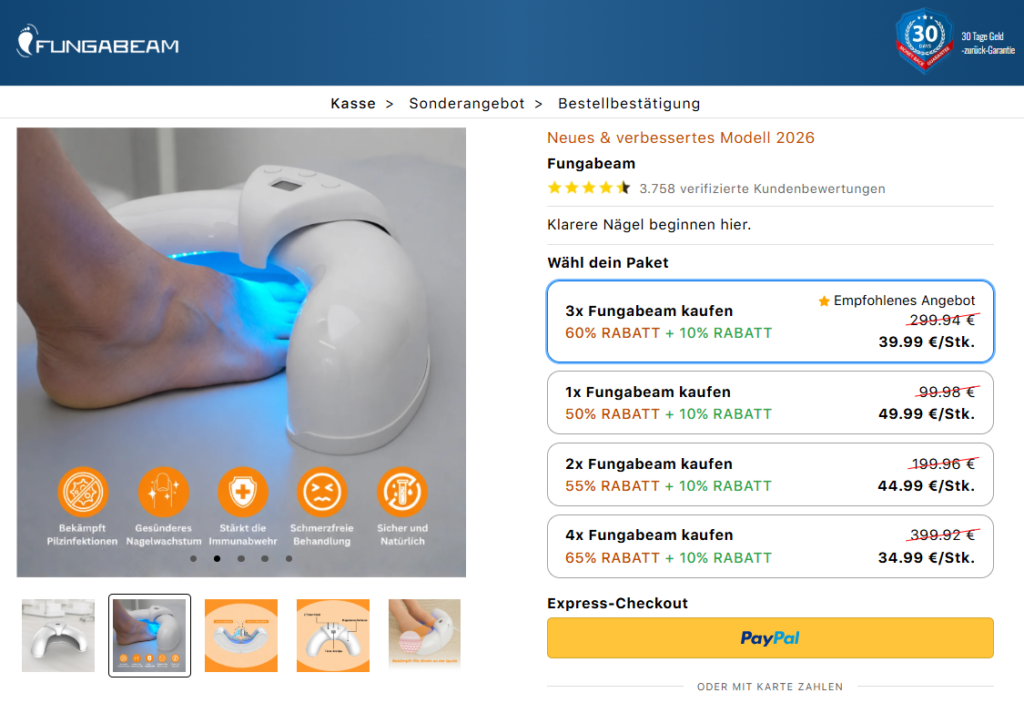
Fungabeam’s online sales pages advertise promotional pricing and multi-device bundles. However, offers can differ between websites and campaigns, so I could not reliably confirm the current price in euros for the specific German/EU checkout link you provided.
Before placing an order, check the following details:
-
Final price: Confirm the amount in euros, including shipping, taxes and any optional add-ons.
-
Package contents: Check whether the order includes the device, charging cable, manual and warranty information.
-
Refund policy: Read the return period, eligibility conditions and return-shipping requirements.
-
Warranty: Verify its duration and which defects or components it covers.
-
Seller details: Confirm the company’s legal identity and customer-support contact information.
-
Regulatory documentation: Request the exact model’s applicable medical-device documentation if the seller makes medical claims.
You can review the Fungabeam checkout page directly, but verify the final terms before paying.
Fungabeam Reviews: How Should You Evaluate Customer Feedback?
Customer testimonials may help you understand how buyers feel about a product’s convenience, setup and ordering experience. However, personal experiences do not establish that a medical device effectively treats a fungal infection.
When evaluating Fungabeam reviews, look for:
-
Detailed accounts that explain how long the device was used.
-
Clear distinctions between improved nail appearance and confirmed infection clearance.
-
Independent reviews that discuss unsuccessful results as well as positive experiences.
-
Evidence that the review refers to the same product model and seller.
-
Transparent information about refunds, warranties and customer support.
Be particularly cautious of testimonials promising dramatic results within days. Even when treatment works, a damaged nail must grow out, which can take many months. A change in appearance alone does not confirm that the infection has disappeared.
Pros and Cons of Fungabeam
| Potential advantages | Limitations |
|---|---|
| Designed for at-home use | Product-specific clinical effectiveness remains uncertain |
| Advertises a short treatment session | Short sessions do not guarantee fast results |
| Does not require applying cream during each session | May not replace established antifungal treatment |
| Intended for fingernails and toenails | Nail changes may have causes other than fungus |
| Simple advertised operating process | Regulatory status and current EU pricing need verification |
Is Fungabeam Worth Buying?
Fungabeam may interest people looking for a convenient, device-based approach to nail care. Its advertised routine is straightforward, and its light-based format offers an alternative to applying a topical product during each session.
Nevertheless, I would not recommend buying Fungabeam solely on the promise that it eliminates nail fungus or restores healthy nails. The product’s marketing does not independently establish those outcomes, and I could not verify the exact model’s regulatory status or clinical evidence from the available information.
Before purchasing, confirm the device specifications, EU regulatory documentation, final checkout price and refund conditions. If you suspect a fungal infection, seek an appropriate diagnosis and compare established treatment options before committing to a consumer device.
Ultimately, the most trustworthy choice is the one supported by credible evidence, transparent seller information and realistic expectations—not simply the strongest advertising claims.