
Lungora Reviews: Is This Daily Lung Support Worth Considering?
Your lungs work every minute of every day. They deal with the air you breathe, environmental irritants, smoke, dust, allergens, and ordinary oxidative stress. So naturally, when a supplement like Lungora promises convenient respiratory wellness support, the idea sounds appealing.


But here’s the question that really matters:
Is Lungora a meaningful addition to your wellness routine, or is the “lung cleanse” label doing most of the selling?
That distinction matters because dietary supplements should complement healthy habits and appropriate medical care—not replace them.
Lungora is marketed as a once-daily capsule for adults who want to support respiratory wellness and overall vitality. The currently published formula commonly associated with Lungora contains magnesium glycinate, alpha-lipoic acid, butcher’s broom root extract, L-carnitine, turmeric extract, and CoQ10.
However, online Lungora pages do not all present identical information. Therefore, anyone considering the product should check the current bottle label and seller information before ordering.
What Is Lungora?
Lungora is a dietary supplement positioned around respiratory and everyday wellness.
Unlike a prescription inhaler or other medical treatment, it comes in a simple capsule format that aims to fit into an ordinary daily routine. Current product information recommends one capsule per day and states that a bottle contains 30 capsules, making it approximately a one-month supply when used as directed.
That simplicity may appeal to people who don’t want complicated supplement schedules.
Still, simplicity should never replace scrutiny.
Before buying any supplement, you should know:
- What ingredients does it contain?
- How much of each ingredient does it provide?
- What does the evidence actually support?
- Is it appropriate for your situation?
- Does the seller clearly explain what you are buying?
Those questions become especially important with Lungora because some online sources describe the formula differently.
Lungora at a Glance
| Feature | What current product information indicates |
|---|---|
| Product type | Dietary supplement |
| Format | Capsule |
| Suggested use | One capsule daily |
| Bottle size | 30 capsules |
| Main positioning | Respiratory and general wellness support |
| Reported ingredients | Magnesium glycinate, alpha-lipoic acid, butcher’s broom, L-carnitine, turmeric extract, CoQ10 |
| Age guidance | Adults |
| Medical status | Not a prescription treatment |
The table provides a practical overview, but always prioritize the label on the product you actually receive.
Why Lungora Gets Attention
Respiratory wellness has become a major concern for many adults.
People spend time in cities, workplaces, traffic, smoky environments, and areas affected by seasonal allergens. Consequently, the idea of giving the body additional nutritional support can sound attractive.
Lungora takes a broader approach rather than relying on one headline ingredient.
Its reported formula combines nutrients and botanicals associated with antioxidant, circulation, energy, and general cellular support.
That makes the formula more interesting than a simple single-ingredient product.
However, there’s an important catch:
A formula designed around general wellness is not automatically a clinically proven lung treatment.
That’s the line a trustworthy review should never blur.
What’s Inside Lungora?
The most consistently reported Lungora formula includes six primary ingredients:
- Magnesium glycinate
- Alpha-lipoic acid
- Butcher’s broom root extract
- L-carnitine
- Turmeric extract
- Coenzyme Q10
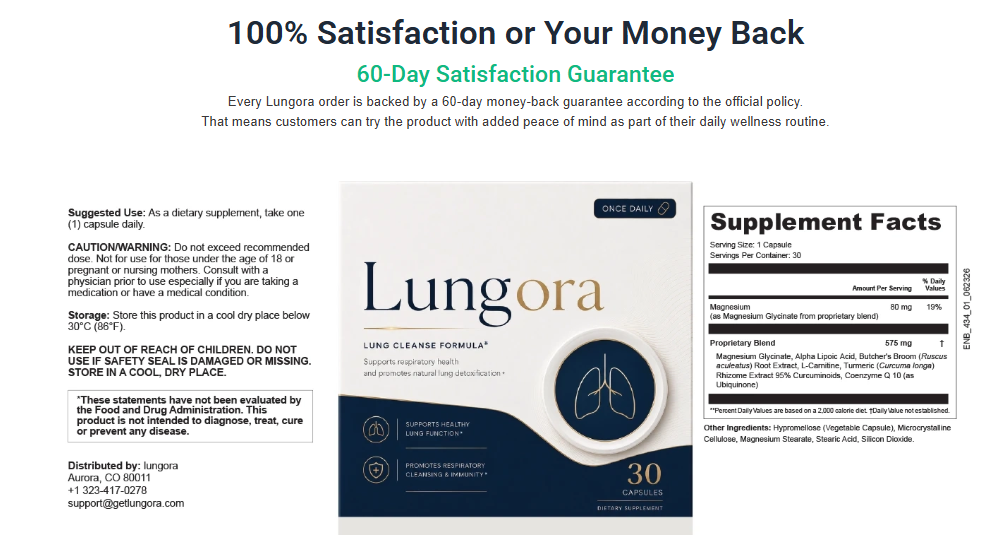
One current ingredient page lists 80 mg of magnesium per serving and places the other five ingredients inside a 575 mg proprietary blend. Because the individual quantities inside that blend are not disclosed on that page, buyers cannot determine the exact dose of each botanical from the published panel alone.
That transparency issue deserves attention.
Knowing what a formula contains is useful. Knowing how much it contains is even better.
Magnesium Glycinate
Magnesium plays numerous roles throughout the body, including normal nerve and muscle function and energy-related processes.
Lungora uses magnesium in the glycinate form, which manufacturers often choose for its generally gentle profile.
However, magnesium isn’t a lung medicine.
Instead, think of it as a nutritional component that contributes to broader wellness. That distinction helps keep expectations realistic.
Alpha-Lipoic Acid
Alpha-lipoic acid, commonly shortened to ALA, is an antioxidant compound involved in cellular energy metabolism.
Its inclusion gives Lungora an additional antioxidant angle.
Nevertheless, the presence of ALA does not establish that Lungora can cleanse lung tissue or treat respiratory disease.
Ingredient research and finished-product evidence are two different things.
Butcher’s Broom Root
Butcher’s broom is a botanical traditionally associated with circulation and vascular support.
That makes it an unusual but interesting addition to Lungora.
However, it also highlights an important point about the formula: several ingredients appear to target general circulation, cellular, or nutritional wellness rather than a specific lung mechanism.
So if you’re evaluating Lungora, don’t judge it solely by its product name.
Look at the actual formula.
L-Carnitine
L-carnitine plays a role in transporting fatty acids into cells for energy production.
Because of that function, supplement companies commonly include it in products positioned around energy, exercise, recovery, and general vitality.
In Lungora, L-carnitine contributes more to the broader wellness strategy than to a specifically respiratory ingredient profile.
That distinction matters if you’re searching specifically for a lung-focused formula.
Turmeric Extract
Turmeric has attracted considerable attention because of its curcuminoid compounds and antioxidant properties.
Lungora includes turmeric extract as part of its reported formula.
Yet, again, don’t turn “antioxidant support” into “lung disease treatment.”
Those are very different claims.
If you’re taking medication—particularly medication that could interact with turmeric or other ingredients—discuss the formula with a healthcare professional before use.
CoQ10
Coenzyme Q10, or CoQ10, naturally occurs in the body and participates in cellular energy production.
Supplement manufacturers frequently use it in formulas aimed at general vitality and antioxidant support.
Within Lungora, CoQ10 rounds out the formula’s broader cellular-wellness approach.
It doesn’t, however, prove that the finished product improves lung function.
Does Lungora Actually Cleanse the Lungs?
This is probably the most important question in the entire review.
The phrase “lung cleanse” sounds powerful, but consumers should interpret it carefully.
Healthy lungs already have natural mechanisms for clearing particles and mucus. A capsule should not be viewed as literally washing pollutants or toxins out of lung tissue.
Therefore, I would treat “lung cleanse” primarily as product positioning, not as a medical process.
If you have persistent coughing, wheezing, chest pain, unexplained shortness of breath, or other respiratory symptoms, don’t attempt to replace medical evaluation with Lungora.
Seek appropriate professional care instead.
Lungora and Respiratory Wellness
There is a more reasonable way to look at the product.
Rather than expecting Lungora to “repair” or “detox” your lungs, you can evaluate it as a general wellness supplement whose formula includes antioxidant, nutritional, energy-related, and circulation-oriented ingredients.
That framing makes the product easier to judge.
Ask yourself:
Am I looking for general nutritional support, or am I trying to treat a respiratory problem?
If it’s the first, Lungora may be something you want to investigate.
If it’s the second, professional medical guidance should come first.
How Do You Take Lungora?
Current Lungora product information recommends one capsule daily and advises users not to exceed the recommended dose.
Some product information suggests taking it with breakfast because attaching a supplement to an existing routine can make daily consistency easier.
Still, follow the directions printed on your current product rather than relying on an older website or third-party review.
Is Lungora Suitable for Everyone?
No.
The current product guidance states that Lungora is intended for adults and should not be used by people under 18 or by those who are pregnant or nursing. It also recommends consulting a physician before use if you take medication or have a medical condition.
That warning shouldn’t feel like a formality.
Supplements contain biologically active ingredients, and those ingredients can interact with medications or existing conditions.
If you take prescription medication, show the complete ingredient panel to your doctor or pharmacist before starting.
Lungora Safety: What Should You Check?
Before opening the bottle, check three things.
1. Read the complete label
Don’t rely solely on advertising language.
2. Check the serving size
Follow the current manufacturer’s instructions.
3. Check the seal and storage instructions
Current product guidance recommends storing Lungora in a cool, dry place below 30°C and avoiding use if the safety seal is damaged or missing.
These steps take only a minute, yet they can prevent avoidable mistakes.
What About Lungora Reviews?
Online customer testimonials can help you understand how people describe their experience, but they cannot establish clinical effectiveness.
Some Lungora websites publish testimonials describing easier breathing, improved comfort, or better overall wellness. However, those testimonials remain individual experiences rather than controlled clinical evidence.
Therefore, don’t use a handful of testimonials as proof that the supplement will produce the same outcome for you.
A trustworthy review should acknowledge both possibilities:
Someone may enjoy the product and notice benefits. Another person may notice little or nothing.
Both outcomes can occur with dietary supplements.
One Important Transparency Issue
There’s another reason to inspect the label carefully.
Different websites currently associated with the Lungora name publish different ingredient descriptions. Some list magnesium, alpha-lipoic acid, butcher’s broom, L-carnitine, turmeric, and CoQ10, while another Lungora-branded website describes a substantially different respiratory formula containing ingredients such as bromelain, elderberry, quercetin, vitamins C and D, zinc, elastin peptides, and mulberry leaf.
That means you shouldn’t copy an ingredient list from one Lungora website and assume it applies to every product sold under the name.
Verify the exact product, seller, label, and formula before purchasing.
This is one of the strongest trust signals a buyer can look for.
Lungora vs. a Dedicated Respiratory Product
If your priority is respiratory support, don’t automatically assume that a product with “lung” in its name offers the most targeted formula.
Instead, compare:
- Ingredient identity
- Individual ingredient doses
- Evidence for the intended use
- Manufacturing information
- Testing information
- Warnings and interactions
- Seller transparency
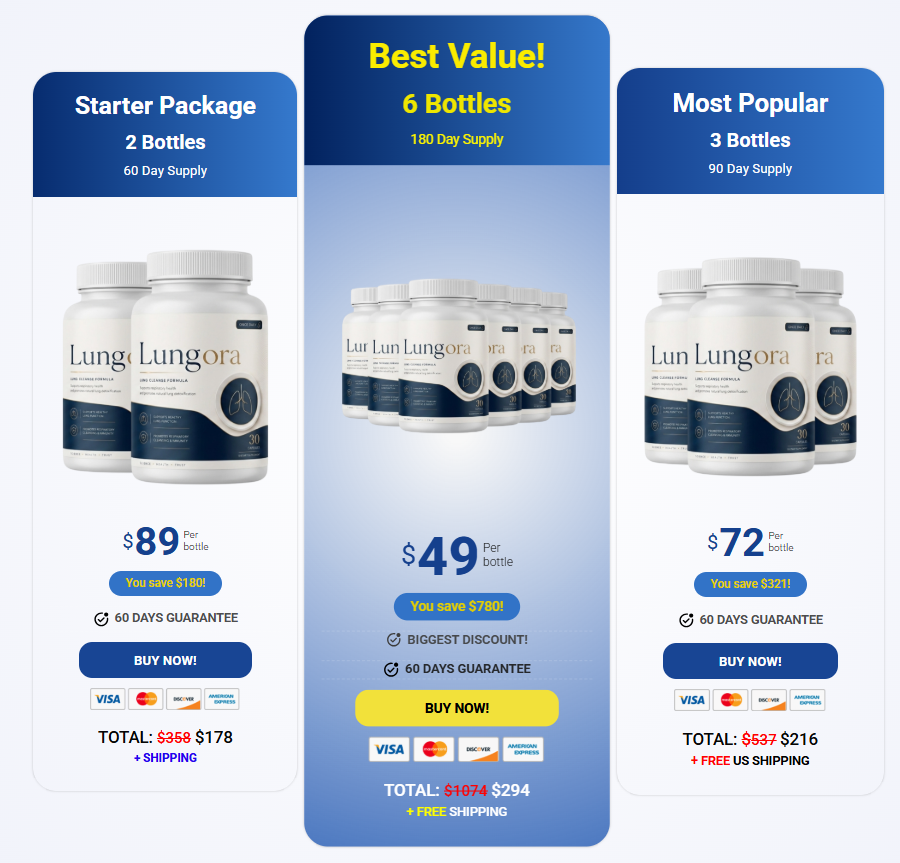
- Refund policy
- Price per serving
This approach gives you a much clearer comparison than simply looking at marketing claims.
Who Might Consider Lungora?
Lungora may appeal to adults who:
- Want a simple once-daily supplement
- Prefer a capsule rather than a powder or drink
- Are interested in broader wellness support
- Want antioxidant and cellular-wellness ingredients
- Prefer combining several ingredients into one product
- Understand that supplementation does not replace medical treatment
It may not suit someone who expects an immediate solution for chronic breathing problems.
Who Should Think Twice Before Buying?
Take extra care if you:
- Take prescription medication
- Have a chronic medical condition
- Are pregnant or breastfeeding
- Have unexplained respiratory symptoms
- Expect the supplement to treat a diagnosed lung condition
- Want individually disclosed doses for every ingredient
In these situations, professional advice matters more than a promotional page.
Lungora: Pros and Cons
Potential Pros
- Convenient once-daily capsule
- 30 capsules per bottle according to current product information
- Broad nutritional and botanical formula
- Includes magnesium, ALA, L-carnitine, turmeric, butcher’s broom, and CoQ10 in the commonly reported formula
- Simple routine for adults who prefer capsules
- Current product guidance provides basic safety precautions
Potential Cons
- Online Lungora websites present inconsistent formulations
- Some ingredients appear within a proprietary blend rather than with individual amounts
- “Lung cleanse” terminology can create unrealistic expectations
- Customer testimonials do not establish clinical effectiveness
- Not intended to replace medical treatment
- Buyers need to verify the exact seller and current label
How to Make a Smarter Lungora Purchase
Before clicking the order button, run through this checklist:
✓ Verify the website
Make sure you’re buying from the seller you intended to use.
✓ Check the label
Compare the online Supplement Facts panel with the bottle information.
✓ Look at the dosage
Don’t assume another Lungora product has the same serving size.
✓ Check the refund policy
Know what happens if the product doesn’t meet your expectations.
✓ Consider your medications
If you take medication, ask a pharmacist or doctor about possible interactions.
✓ Keep your expectations realistic
A supplement can support a wellness routine, but it cannot replace diagnosis or treatment.
The Bigger Lung-Health Picture
If you genuinely want to protect respiratory health, don’t put all your attention on a capsule.
Your everyday environment matters.
Avoid smoking and secondhand smoke. Reduce exposure to known pollutants when practical. Stay physically active if your health allows it. Maintain good nutrition and sleep. And, importantly, investigate persistent respiratory symptoms instead of masking them with supplements.
Those fundamentals deserve more attention than any “cleanse” marketing phrase.
Final Verdict: Is Lungora Worth Considering?
Lungora is an interesting example of why you should look beyond a supplement’s name.
The commonly reported formula combines magnesium glycinate, alpha-lipoic acid, butcher’s broom, L-carnitine, turmeric, and CoQ10, creating a broader antioxidant, cellular, circulation, and nutritional profile.
However, the current online information raises an important concern: different Lungora-branded websites describe different formulas.
Consequently, the smartest approach isn’t to accept every marketing claim at face value.
Instead, verify the exact product you are buying.
If you want a convenient daily wellness supplement and understand its limitations, Lungora may be worth investigating. But if you’re searching for a treatment for asthma, COPD, chronic coughing, shortness of breath, infection, or another respiratory condition, don’t rely on Lungora—or any supplement—as a substitute for professional medical care.
The strongest Lungora decision isn’t the one based on the biggest promise. It’s the one based on the clearest label, realistic expectations, and evidence that actually matches your goal.