
Stopwatt Reviews: Can a Small Plug-In Device Really Help With Your Electricity Bill?
Electricity bills rarely give homeowners much room to breathe. You switch off lights, unplug unused devices, reduce heating or cooling, and still wonder why the monthly total keeps climbing.


That frustration explains the interest in StopWatt.
Instead of asking homeowners to replace appliances or rewire their property, StopWatt takes a much simpler approach: plug a compact device into an electrical outlet and leave it working as part of the home’s electrical setup.
But here’s the question that matters:
Can a small plug-in device genuinely make a meaningful difference to household electricity use?
StopWatt is marketed as an energy-saving and power-stabilizing device. Product information describes it as a tool designed to support electrical efficiency, reduce wasted energy, and help protect household electronics from electrical fluctuations.
However, electricity-saving claims deserve careful examination. Your home’s appliances, electrical system, usage patterns, local electricity rates, and the device’s actual electrical characteristics can all affect the outcome.
So, rather than repeating exaggerated promises, let’s examine what StopWatt is, how it is supposed to work, what users should realistically expect, and what to check before buying.
What Is StopWatt?
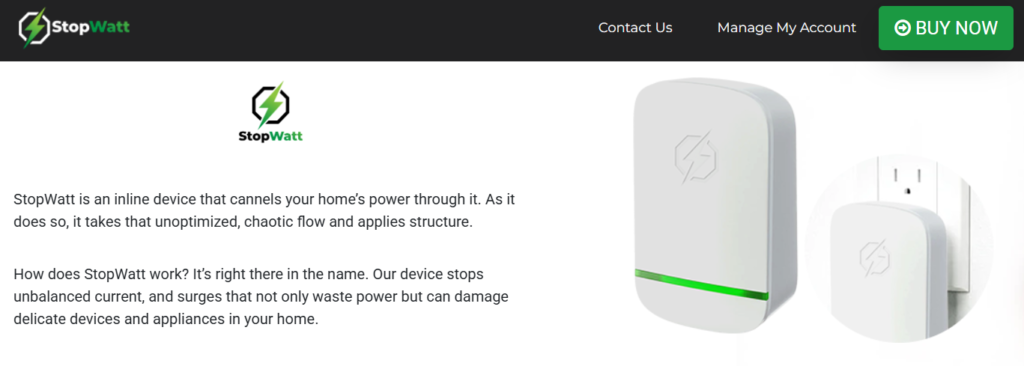
StopWatt is a compact plug-in electrical device marketed for household energy management.
The product is designed to connect directly to an electrical outlet rather than requiring complicated installation. Available StopWatt documentation describes plugging the device into an outlet and using the illuminated indicator to confirm operation.
The overall concept focuses on electrical efficiency.
According to current product descriptions, StopWatt aims to support:
- More stable electrical current
- Reduced energy waste
- Improved electrical efficiency
- Protection from electrical fluctuations
- Convenient plug-and-play operation
That sounds appealing, especially for homeowners who want a low-effort approach.
Nevertheless, it’s important to separate what the product is designed or marketed to do from a guaranteed reduction in your electricity bill.
Why Are People Searching for StopWatt?
The reason is simple: energy costs add up.
A household may run refrigerators, washing machines, televisions, computers, heating systems, air conditioners, lighting, chargers, and countless other devices every day.
Even small improvements in energy management can sound attractive.
StopWatt therefore targets a very practical user intent:
“I want to reduce unnecessary electricity waste without making major changes to my home.”
That makes the product particularly interesting for people who have already tried basic energy-saving habits and want to explore additional options.
How Is StopWatt Supposed to Work?
StopWatt marketing generally describes the device around electrical stabilization and energy optimization.
The basic concept is straightforward:
Step 1 — Plug it in
Connect StopWatt to an appropriate electrical outlet.
Step 2 — Activate the device
The product documentation says the green LED indicates that the unit is operating when connected correctly.
Step 3 — Leave it working
The device is designed for continuous use without requiring regular maintenance.
Some StopWatt marketing materials further describe voltage stabilization, current balancing, and filtering of electrical noise as part of the product’s operating concept.
However, homeowners should not interpret these descriptions as proof of a specific percentage reduction in their electricity bill.
Your actual result depends heavily on your electrical environment and energy consumption.
What Does “Energy Saving” Mean Here?
This is where many product reviews become confusing.
A device can affect electrical characteristics without automatically causing your utility meter to record dramatically lower household consumption.
For example, electrical systems can involve concepts such as:
- Voltage
- Current
- Power factor
- Reactive power
- Electrical noise
- Harmonic distortion
- Real energy consumption
These concepts are related, but they are not interchangeable.
Therefore, claims such as “save 50%” or “cut your bill dramatically” should not be accepted without appropriate evidence and context.
For an ordinary residential customer, the most useful measurement remains simple:
How many kilowatt-hours did the household actually consume before and after using the device under comparable conditions?
That is much more meaningful than relying on a promotional percentage.
StopWatt and Power Quality
StopWatt is also marketed around improving the quality or stability of electricity.
Available product materials describe the device as helping stabilize electrical current and address fluctuations or electrical noise.
That positioning may appeal to homeowners who worry about:
- Voltage fluctuations
- Electrical spikes
- Appliance stress
- Unstable power
- Electronic equipment
However, consumers should understand that power-quality improvement and electricity-bill reduction are separate questions.
A device can potentially influence certain electrical characteristics without necessarily producing a large reduction in household energy consumption.
That distinction makes a StopWatt review more useful and more trustworthy.
Can StopWatt Lower Your Electricity Bill?
This is the question most buyers actually care about.
StopWatt is marketed to help reduce electricity waste and therefore potentially lower energy costs.
But there is no responsible way to promise that every household will save a particular percentage.
Why?
Because electricity consumption varies dramatically between homes.
A small apartment with efficient appliances and low usage has a completely different energy profile from a large house running multiple air conditioners, electric water heating, refrigerators, dryers, and other high-consumption equipment.
Your local electricity tariff also matters.
Therefore, actual savings should be measured rather than assumed.
A Better Way to Test StopWatt
If you purchase an energy-saving device, don’t simply look at one unusually low bill and declare success.
Instead, use a more controlled comparison.
Before Installation
Record your electricity consumption in kWh for several billing cycles if possible.
Also note major variables such as:
- Weather
- Air-conditioning use
- Heating use
- Number of occupants
- Working-from-home hours
- Major appliance use
- Travel or holidays
After Installation
Continue recording your electricity consumption.
Then compare similar periods rather than comparing completely different seasons.
For example, comparing a mild spring month with a peak summer month may tell you very little because cooling demand can dramatically change household consumption.
This approach gives you a much clearer answer to the question:
“Does StopWatt make a measurable difference in my home?”
StopWatt Installation: Is It Complicated?
One of the strongest selling points of the product is its simplicity.
Available StopWatt instructions describe a straightforward plug-in setup and indicate that the device does not require routine maintenance.
That means homeowners do not generally need to:
- Rewire the house
- Replace the breaker panel
- Modify appliances
- Install complicated software
- Perform regular maintenance
However, electrical safety should always come first.
Never open or modify an electrical device yourself. The available product documentation specifically warns against attempting to repair or open the unit.
If a device, outlet, cord, or plug appears damaged, stop using it and seek appropriate electrical assistance.

Where Should StopWatt Be Plugged In?
StopWatt instructions and promotional materials vary somewhat across current websites.
One available manual says the device can be plugged into a socket or power strip, while other StopWatt promotional pages recommend positioning a unit close to the breaker box for broader electrical-system coverage.
Because installation recommendations can differ by product version and seller, the instructions supplied with your specific StopWatt unit should take priority.
Do not assume that every StopWatt-branded device has identical specifications.
What Appliances Does StopWatt Work With?
StopWatt is marketed as a household electrical device rather than an accessory for one specific appliance.
That means the intended application generally involves the home’s electrical environment rather than directly attaching the device to a refrigerator, television, washing machine, or air conditioner.
However, compatibility still depends on the electrical specification of the specific unit.
Always check:
- Rated voltage
- Frequency
- Outlet type
- Regional electrical standards
- Product documentation
One available StopWatt manual lists a rated voltage range of 90V–250V and a frequency range of 50Hz–60Hz, but buyers should verify the specification for the exact model they receive.
StopWatt for Apartments vs. Houses
The product concept can appeal to both homeowners and apartment residents.
For a house
A homeowner may be interested in StopWatt as part of a broader electrical-efficiency strategy.
For an apartment
The compact plug-in format may appeal to renters or apartment residents who cannot make permanent electrical modifications.
However, apartment residents should follow their local electrical rules and avoid interfering with shared or building-level electrical infrastructure.
The device should remain a plug-in product unless a qualified professional advises otherwise.
Can StopWatt Protect Appliances?
Many StopWatt product descriptions promote the device as helping protect electronics and appliances from electrical fluctuations or spikes.
That sounds useful, but buyers should understand the difference between power conditioning and a certified surge protector.
If protecting expensive electronics is your primary goal, check whether the specific StopWatt model carries the appropriate safety certifications and electrical ratings for your country.
Don’t assume that a generic plug-in energy device provides the same protection as a properly rated surge-protection system.
StopWatt and “Dirty Electricity”
Another phrase frequently associated with StopWatt is “dirty electricity.”
Marketing pages use this term to describe electrical noise, fluctuations, or unwanted high-frequency components in electrical systems.
The terminology can sound alarming, but consumers should be cautious.
“Dirty electricity” is not a simple measurement that automatically tells you your home is unsafe.
If you’re concerned about electrical safety or power quality, a qualified electrician can assess the actual electrical system and identify genuine problems.
Therefore, don’t purchase a device simply because an advertisement makes your household electricity sound dangerous.
What About EMF Claims?
Some StopWatt-related websites make claims about reducing electromagnetic radiation or EMF/EMR exposure.
These claims require particularly careful interpretation.
StopWatt should not be presented as a medical device or as a guaranteed solution for health problems supposedly caused by household electricity.
If your main goal is electrical safety, focus first on established electrical practices, proper wiring, compliant appliances, and professional inspection where necessary.
Is StopWatt Easy to Use?
Yes, simplicity is one of the product’s main attractions.
The basic routine involves plugging the device into an appropriate outlet and allowing it to operate.
There is no daily schedule, app, refill, battery replacement, or complicated maintenance routine described in the available product documentation.
That makes StopWatt different from many smart-home energy systems that require monitoring apps or detailed configuration.
However, simple installation should not be confused with guaranteed energy savings.
StopWatt vs. Traditional Energy-Saving Methods
Before buying any plug-in energy device, compare it with proven energy-saving measures.
| Approach | Potential impact | Effort |
|---|---|---|
| LED lighting | Can reduce lighting consumption | Low |
| Efficient appliances | Can significantly reduce appliance energy use | Medium |
| Smart thermostat | Can optimize heating/cooling | Medium |
| Unplugging unnecessary devices | Can reduce standby consumption | Low |
| Better insulation | Can reduce heating/cooling demand | Medium–High |
| StopWatt | Marketed to support electrical efficiency | Low |
| Monitoring electricity use | Helps identify major energy consumers | Low |
This comparison highlights an important point.
StopWatt should be considered one possible component of an energy-management strategy, not a replacement for proven efficiency improvements.
Who Might Consider StopWatt?
StopWatt may appeal to people who:
- Want a simple plug-in energy-management device
- Are concerned about electricity waste
- Want to monitor their home’s energy efficiency
- Prefer low-maintenance products
- Want to explore power-quality solutions
- Live in a home or apartment with compatible electrical outlets
It may also interest homeowners who have already implemented basic energy-saving measures and want to experiment with additional approaches.
Who Should Think Twice?
A cautious approach makes sense if you:
- Expect guaranteed bill reductions
- Believe one device will eliminate most household energy consumption
- Need certified surge protection
- Have serious electrical problems
- Have damaged outlets or wiring
- Plan to modify the device
- Cannot verify the product’s electrical specifications
If you have a genuine electrical fault, don’t rely on StopWatt.
Call a qualified electrician.
StopWatt Safety Considerations
Electrical products deserve more caution than ordinary household gadgets.
Before using StopWatt:
- Inspect the plug and casing.
- Use an appropriate electrical outlet.
- Follow the supplied instructions.
- Keep the device away from water.
- Do not open or modify the unit.
- Keep it away from children.
- Stop using it if it becomes damaged or behaves unusually.
The available StopWatt manual specifically warns that children should not use the device and advises against opening or repairing the unit yourself.
If you notice overheating, burning smells, sparks, damaged insulation, or unusual electrical behaviour, disconnect the device safely and seek professional help.
What Should You Check Before Buying StopWatt?
Don’t let a dramatic savings headline make the decision for you.
Instead, check these details first:
1. Electrical specifications
Confirm voltage, frequency, plug type, and compatibility with your country.
2. Safety certifications
Look for legitimate certification information relevant to your market.
3. Return policy
A clearly stated refund policy gives you greater purchasing protection.
4. Warranty
Check how long the warranty lasts and what it actually covers.
5. Seller identity
Make sure you know who operates the website and who handles customer support.
6. Evidence for savings claims
If a seller promises a specific percentage reduction, look for meaningful evidence rather than relying on a marketing graphic.
7. Actual cost
Calculate the full price, including shipping, taxes, optional upgrades, and multiple-unit offers.
The Biggest Mistake Buyers Can Make
The biggest mistake is expecting StopWatt to magically transform an inefficient home.
If your refrigerator is old, your air conditioner runs constantly, your insulation is poor, and your household consumes large amounts of electricity, a plug-in device should not become your only energy strategy.
Start with the biggest energy consumers.
Then measure.
Then optimize.
That sequence gives you much more control over your electricity costs.
Final Verdict: Is StopWatt Worth Considering?
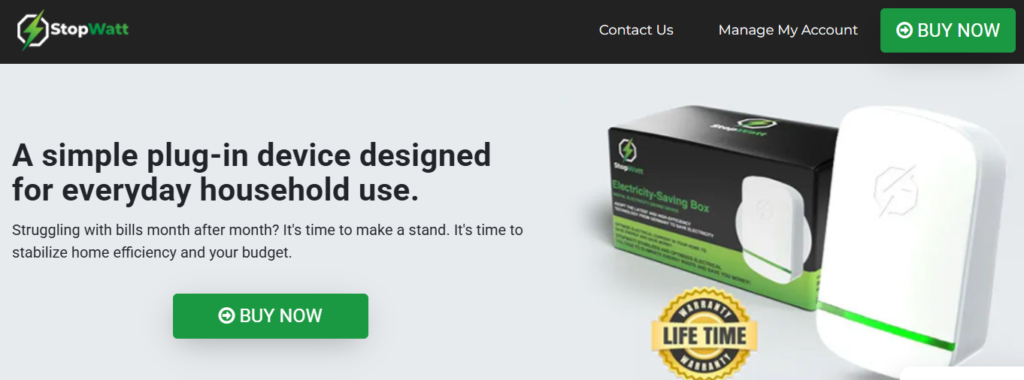
StopWatt is an easy-to-use plug-in device marketed around energy efficiency, electrical stabilization, and reduced electricity waste. Available product documentation supports the basic plug-in concept and describes continuous operation without routine maintenance.
Its biggest appeal is simplicity.
You don’t need a complicated installation, and you can incorporate the device into your home’s existing electrical setup.
However, the savings question deserves more caution.
No responsible review should guarantee that every household will save a particular percentage on its electricity bill. Actual consumption depends on the home, appliances, usage patterns, electrical system, and local energy prices.
Therefore, the smartest way to approach StopWatt is as an optional energy-management product that should be evaluated through measurable results, not dramatic promises.
If you decide to try it, establish a baseline first, follow the supplied instructions, monitor your kWh consumption, and compare similar billing periods.
That turns the question from “Does StopWatt sound convincing?” into the much more useful question:
“Does StopWatt make a measurable difference in my home?”
And ultimately, that’s the result that matters.