
HumeCare Plus Review: A Physician-Guided Approach to Personalized Weight Management
Weight loss can look simple on paper: eat less, move more, and watch the number on the scale fall.
Real life rarely works that neatly.
Hunger, cravings, previous weight-loss attempts, changing routines, medication side effects, and the challenge of maintaining muscle can all make long-term weight management more complicated. That’s why HumeCare Plus takes a broader approach.


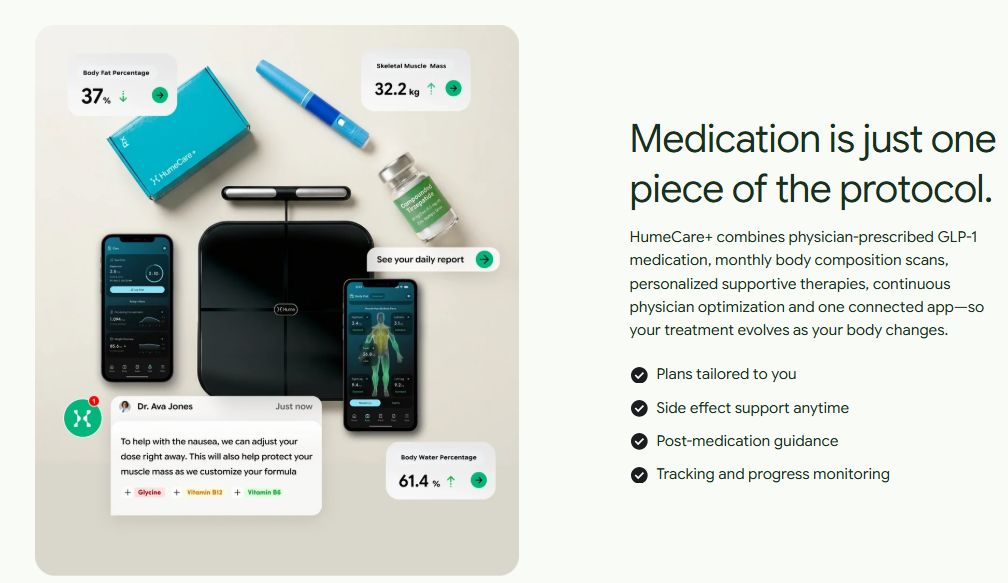
Rather than treating weight loss as nothing more than a prescription and a scale, HumeCare Plus combines physician-guided GLP-1 treatment, personalized dosing, body-composition monitoring, supportive therapies, clinician access, and an app-based tracking system. According to HumeCare, the program is designed to help patients focus on changes in body composition rather than weight alone.
That distinction matters.
If the goal is healthier weight management, knowing what is changing can be just as useful as knowing how much the scale has changed.
What Is HumeCare Plus?
HumeCare Plus is a physician-guided weight-management program built around prescription GLP-1 medication.
The program starts with an eligibility assessment. From there, HumeCare says a physician develops a personalized treatment protocol based on the patient’s body composition, goals, and response to treatment. The program can include semaglutide or tirzepatide, with additional supportive ingredients such as glycine, vitamin B12, and vitamin B6 incorporated when clinically appropriate.
HumeCare also combines medication with ongoing monitoring.
The official website describes:
- Personalized GLP-1 medication
- Physician oversight
- Body-composition scans
- Medication tracking
- Food logging
- Health-metric monitoring
- Side-effect support
- Post-medication guidance
- Access to clinicians through the Hume app
So, instead of viewing the medication as the entire treatment, HumeCare positions the medication as one component of a larger weight-management protocol.
Why HumeCare Plus Takes a Different Approach
Traditional weight-loss programs often focus heavily on one number: body weight.
But body weight doesn’t tell the whole story.
Two people can lose the same number of pounds while experiencing very different changes in fat mass, lean mass, and other body-composition measures.
HumeCare therefore emphasizes body-composition monitoring alongside scale weight. Its website says the program uses body scans to track fat and muscle so patients can better understand what is changing during treatment.
That creates a more detailed picture:
Scale weight → Fat mass → Lean mass → Body composition → Overall progress
The approach doesn’t mean every patient will experience the same outcome. Instead, it gives the care team additional information to consider when managing the treatment.
Personalized GLP-1 Medication
One of the central components of HumeCare Plus is personalized GLP-1 treatment.
The program’s materials identify semaglutide or tirzepatide as the primary medication options. HumeCare states that physicians adjust treatment according to the patient’s individual needs and response.
GLP-1-based medications can influence appetite and feelings of fullness. Tirzepatide also acts on GIP in addition to GLP-1 pathways.
However, these are prescription medications, not ordinary dietary supplements. Eligibility, medication selection, dosing, contraindications, and monitoring require appropriate clinical assessment.
That makes physician involvement an important part of the program.
Semaglutide and Tirzepatide
HumeCare identifies semaglutide and tirzepatide as medication options within its personalized protocol.
Semaglutide
Semaglutide belongs to the GLP-1 receptor agonist class.
It can affect appetite and food intake, which can help eligible patients reduce calorie consumption as part of a comprehensive weight-management plan.
Tirzepatide
Tirzepatide acts on both GIP and GLP-1 receptors.
Like semaglutide, it can influence appetite and food intake. Clinical evidence has demonstrated substantial weight loss with these medications in appropriate patient populations, although individual outcomes vary.
HumeCare doesn’t necessarily use the same medication or dose for every person. Instead, the website describes a personalized process in which the physician builds and adjusts the protocol.
The Role of Glycine
HumeCare’s materials describe glycine as one of the supportive components that may form part of its personalized protocol.
The company positions glycine around muscle preservation, liver support, and metabolism.
However, these statements should not be interpreted as proof that adding glycine guarantees muscle preservation or prevents every potential effect associated with weight loss.
Muscle retention still depends on multiple factors, including:
- Adequate protein intake
- Resistance training
- Overall nutrition
- Calorie intake
- Activity level
- Age
- Baseline muscle mass
- Medication response
HumeCare’s broader strategy therefore combines monitoring with lifestyle guidance rather than relying on a single ingredient.
Vitamin B12 and Vitamin B6
The HumeCare program also discusses vitamin B12 and vitamin B6 as supportive components.
According to HumeCare, B12 can support energy and nervous-system function, while B6 forms part of the program’s approach to metabolic support and managing certain treatment-related concerns.
The exact use of these nutrients should depend on the individualized treatment plan rather than assuming every patient needs identical supplementation.
Body-Composition Monitoring
This is one of the most distinctive elements of the HumeCare Plus model.
Instead of tracking only body weight, HumeCare says its program uses regular body scans to differentiate changes in fat and lean mass.
That gives patients another way to evaluate progress.
For example, a person might see:
Body weight ↓
but the more useful question becomes:
How much of that change came from fat versus lean tissue?
HumeCare says its Hume Pod/body-scanning system helps provide this additional information. The website describes tracking fat loss, muscle retention, and other body metrics.
This type of measurement can make a weight-management journey more informative because the scale represents only one piece of the picture.
The HumeCare App
The program also incorporates an app-based experience.
According to the official website, patients can use the Hume app to:
- Track medication
- Monitor progress
- Log food
- Review health information
- Communicate with the care team
This creates a connected system rather than separating treatment, tracking, and communication across different platforms.
For someone who prefers digital tracking, that can make the process easier to follow.
Physician Support
HumeCare Plus emphasizes ongoing clinical involvement.
The company describes access to clinicians who can help manage medication, side effects, progress, and treatment adjustments.
That matters because GLP-1 treatment isn’t necessarily a one-size-fits-all process.
Patients can respond differently to medication. Appetite changes can vary. Side effects can differ. And the appropriate dose may change as treatment progresses.
A physician-guided model allows those factors to form part of the treatment conversation.
How HumeCare Plus Works
The process starts with an online assessment.
Step 1: Complete the Eligibility Assessment
HumeCare’s website directs potential patients through an online assessment designed to determine whether the program may be appropriate for them.
The assessment collects information needed to begin evaluating the patient’s circumstances.
Step 2: Clinical Review
After the assessment, the program involves physician oversight.
The clinician can evaluate the available information and determine whether prescription treatment is appropriate.
Step 3: Build the Personalized Protocol
If eligible, HumeCare says the physician creates a personalized protocol based on the patient’s goals, body composition, and response to treatment.
This can include an appropriate GLP-1 medication and supportive components when clinically suitable.
Step 4: Receive Treatment
The website states that treatment is shipped to the patient’s door, with monthly delivery described as part of the program.
Step 5: Track Progress
Patients can use the Hume app and body-composition monitoring tools to follow their progress.
Step 6: Adjust as Needed
As the patient’s body responds, the clinical team can review progress and modify the treatment plan when appropriate.
This creates a cycle:
Assess → Prescribe → Track → Review → Adjust
That ongoing process sits at the centre of the HumeCare Plus model.
What Can You Expect During Treatment?
HumeCare describes several stages of its weight-management journey.
During the first 0–3 months, the company says patients may experience gradual weight reduction while the medication dose increases and the body adjusts. Its website gives a potential range of 5–10% body-weight loss during this period.
For 3–6 months, HumeCare describes a period in which patients may reach a more established dose and continue working toward weight reduction. The website gives a 10–20% potential range during this stage.
For 6–12+ months, the program focuses on longer-term weight management and building sustainable habits alongside medication.
These figures are not guarantees. Individual outcomes depend on medication, health status, adherence, lifestyle, starting weight, and many other variables.
HumeCare’s Reported Results
The HumeCare website currently reports that its patients lost an average of 21.5% of body weight over 10 months, based on an internal analysis of 6,846 HumeCare Plus members. The site explicitly notes that individual results may vary.
This is an internal company analysis rather than a randomized clinical trial of the HumeCare Plus program.
That distinction matters when evaluating the number.
It provides information about the company’s reported member outcomes, but it should not be interpreted as a guaranteed result for a new patient.
Why Muscle Preservation Matters
Weight loss isn’t simply about becoming lighter.
Lean tissue—including muscle—plays an important role in physical function and metabolic health.
That’s why HumeCare places considerable emphasis on monitoring lean mass during treatment. The company says its program aims to help patients lose fat while preserving more lean tissue.
The most practical way to support muscle retention generally includes:
- Adequate protein
- Resistance training
- Sufficient nutrition
- Appropriate calorie reduction
- Regular physical activity
- Clinical monitoring
Medication can support appetite management, but maintaining physical capability requires more than medication alone.
Managing Potential Side Effects
GLP-1 medications can cause side effects.
Commonly discussed effects can include gastrointestinal symptoms such as nausea, vomiting, diarrhea, constipation, and abdominal discomfort. The specific risks depend on the medication and individual circumstances.
HumeCare says its physician-led protocol aims to manage side effects through personalized dosing, supportive therapies, nutrition and hydration guidance, and ongoing access to the care team.
Still, no program can guarantee that a patient will experience no side effects.
HumeCare’s own website includes testimonials from individual patients describing very different experiences, and it explicitly states that testimonials do not guarantee specific results.
Patients should follow their prescribing clinician’s instructions and seek medical attention for serious or concerning symptoms.
HumeCare Plus Is More Than Medication
This is perhaps the clearest way to understand the program.
HumeCare describes its model as:
Medication + physician oversight + body-composition monitoring + supportive care + digital tracking
The company says this allows treatment to evolve as the patient’s body changes.
That approach can also encourage patients to pay attention to habits beyond the prescription itself.
For example:
Nutrition
Prioritizing nutrient-dense foods and sufficient protein can support overall health during weight management.
Strength Training
Resistance exercise can help support muscle while losing weight.
Hydration
Maintaining adequate fluid intake becomes particularly important when appetite and food intake change.
Sleep
Good sleep supports general health and can make lifestyle changes easier to maintain.
Long-Term Habits
Medication can help reduce appetite, but sustainable weight management also requires habits that can continue beyond active treatment.
The Post-Medication Plan
Stopping weight-management medication can raise questions about maintaining progress.
HumeCare therefore highlights post-medication guidance and a physician-managed exit strategy as part of its broader model.
The purpose is to help patients transition from active medication treatment while continuing to focus on nutrition, physical activity, appetite management, and other healthy habits.
The exact process should depend on the individual’s medication, response, medical history, and clinician’s recommendations.
Patients should never independently change or stop prescription medication without discussing it with their healthcare provider.
Who Might Consider HumeCare Plus?
HumeCare Plus may be relevant to adults who are exploring physician-guided prescription weight-management treatment and want more than a medication-only approach.
It may appeal to people who value:
- Physician involvement
- Personalized treatment
- Prescription GLP-1 options
- Body-composition monitoring
- Digital tracking
- Ongoing clinician access
- Side-effect support
- Structured weight-management guidance
- Post-treatment planning
However, eligibility depends on individual health circumstances.
The appropriate treatment isn’t determined simply by wanting to lose weight. A qualified clinician needs to assess whether prescription medication is appropriate.
What Makes HumeCare Plus Different?
The central difference in HumeCare’s positioning is its focus on protocol rather than prescription alone.
The company says standard programs can focus heavily on medication and scale weight, whereas HumeCare combines medication with body-composition monitoring and ongoing clinical optimization.
Its program brings several components together:
| Component | HumeCare Plus Approach |
|---|---|
| Medication | Physician-prescribed GLP-1 treatment |
| Personalization | Protocol based on patient data and response |
| Monitoring | Body composition and health metrics |
| Muscle focus | Tracks lean mass alongside weight |
| Digital tools | Hume app |
| Clinical support | Ongoing clinician access |
| Side-effect support | Personalized management |
| Delivery | Treatment shipped to the patient |
| Long-term support | Post-medication guidance |
This structure makes HumeCare more than a simple prescription-ordering service.

HumeCare Plus Pricing and Program Features
The current official website lists a three-month plan and states that the introductory price starts at $199 per month, compared with a listed regular starting price of $299 per month. It also currently advertises monthly shipping, cancellation without fees, a 90-day money-back guarantee, and complimentary access to certain services and tools within the displayed offer.
Because promotional pricing and guarantee terms can change, prospective patients should confirm the current offer and full terms before purchasing.
The website also states that HumeCare Plus is FSA/HSA eligible for reimbursement. Eligibility for reimbursement can depend on individual plan rules and should be confirmed with the relevant benefits provider.
HumeCare Plus Money-Back Promise
HumeCare currently advertises a 10% body-weight-loss money-back promise.
The company states that it is confident patients will lose at least 10% of body weight within six months and says it will refund qualifying customers who do not meet that threshold, subject to the full terms.
This is a commercial guarantee, not a medical guarantee.
Anyone considering the program should read the complete eligibility requirements, exclusions, and refund conditions before relying on the promise.
Trust, Regulation and Transparency
The HumeCare website displays references to the General Pharmaceutical Council, Care Quality Commission, and MHRA.
Because regulatory requirements can differ depending on the jurisdiction and specific service being provided, consumers should verify which regulatory framework applies to their particular treatment and location.
The website also identifies medical leadership and provides information about members of its clinical team.
For a prescription weight-management program, these details matter because the service involves healthcare rather than a conventional over-the-counter supplement.
HumeCare Plus vs. a Typical Supplement
It’s important not to confuse HumeCare Plus with products such as weight-loss gummies, teas, powders, or capsules.
HumeCare Plus involves prescription medication and clinical care.
A conventional supplement generally contains nutrients, botanicals, or other non-prescription ingredients. HumeCare Plus instead uses a physician-guided treatment model where medication eligibility, dosing, and monitoring form part of the process.
That distinction affects everything from safety considerations to who should use the product.
Important Safety Considerations
HumeCare Plus involves prescription medications, so prospective patients should treat the program as a medical treatment rather than an ordinary wellness product.
Before beginning treatment, discuss relevant information with the prescribing clinician, including:
- Current medications
- Existing medical conditions
- Previous weight-loss treatments
- Allergies
- Pregnancy or plans for pregnancy
- Previous reactions to GLP-1 medications
- Gastrointestinal conditions
- Relevant surgical history
Do not start, stop, increase, or reduce prescription medication without appropriate medical guidance.
Also, don’t assume that a personalized program eliminates every potential risk. Individual assessment remains essential.
Who Should Avoid Self-Treating With GLP-1 Medication?
Anyone considering semaglutide or tirzepatide should obtain appropriate medical evaluation rather than purchasing medication independently.
GLP-1 and related medications have specific contraindications, warnings, drug interactions, and monitoring requirements.
That is one reason HumeCare’s physician-guided structure matters.
The right medication, dose, and treatment schedule depend on the patient—not simply on the desired amount of weight loss.
What Makes the HumeCare Approach Data-Driven?
HumeCare repeatedly emphasizes measurement.
Instead of relying only on:
“What does the scale say?”
the program aims to collect information about:
- Body weight
- Fat mass
- Lean mass
- Medication use
- Food intake
- Health metrics
- Treatment response
The company says these measurements help its clinicians understand what is happening and adjust the protocol accordingly.
That creates a more complete feedback loop:
Measure → Understand → Adjust → Measure again
For a long-term weight-management program, that can provide a more detailed framework than simply recording weekly weight.
A Practical Way to Approach HumeCare Plus
If you’re considering HumeCare Plus, don’t start with the question:
“How quickly can I lose weight?”
Start with:
“Is this treatment medically appropriate for me, and how will the program help me manage my health during weight loss?”
Then examine:
- Whether you qualify for prescription treatment
- Which medication your clinician recommends
- How dosing will be determined
- What monitoring you’ll receive
- How side effects will be handled
- How body composition will be measured
- What lifestyle guidance you’ll receive
- What happens when treatment ends
- The exact cost and cancellation terms
- The current money-back guarantee requirements
Those questions provide a much clearer picture of the program than a headline weight-loss percentage alone.
Final Thoughts on HumeCare Plus
HumeCare Plus presents a broader model of physician-guided weight management.
The program combines prescription GLP-1 medication, personalized treatment, body-composition monitoring, supportive therapies, digital tracking, clinician access, and post-treatment guidance.
Its strongest point of differentiation is the emphasis on understanding more than scale weight. HumeCare wants patients to see changes in fat and lean mass while clinicians use those measurements alongside other information to guide treatment.
At the same time, prospective patients should evaluate the program carefully.
The reported 21.5% average body-weight loss comes from HumeCare’s internal analysis of 6,846 members, not a randomized trial of the program, and the company itself states that individual results vary.
Likewise, testimonials describe individual experiences rather than guaranteed outcomes.
Ultimately, HumeCare Plus is best understood as a physician-guided weight-management service rather than a simple weight-loss product.
For someone considering prescription GLP-1 treatment, the important questions aren’t only about pounds lost. They also involve medical suitability, medication safety, muscle preservation, monitoring, lifestyle support, cost, and what happens after treatment.
The goal isn’t simply to make the scale move. A well-structured weight-management plan should help you understand the changes happening in your body and give you appropriate clinical support throughout the process.